

How Does Skydiving Work? Freefall, Parachutes & Common Questions
Your Answers to Top Skydiving FAQs
Thinking about skydiving for the first time? Whether you’re wondering what freefall feels like, how high you’ll jump, or what to expect on the big day, we’ve got answers!
From the adrenaline rush of freefall to the incredible views under parachute, there’s a lot to look forward to. We’ve answered some of the most common skydiving questions to help you feel informed, prepared, and excited for your first jump at Skydive Pepperell in Massachusetts.
What happens on your first tandem skydive?
When you arrive, you’ll check in, complete your paperwork, and watch a training video explaining what to expect during your tandem skydive.
Before heading to the plane, you’ll meet your tandem instructor, get fitted with your harness, and review the body positions used during exit, freefall, and landing. You’ll also have plenty of opportunities to ask questions.
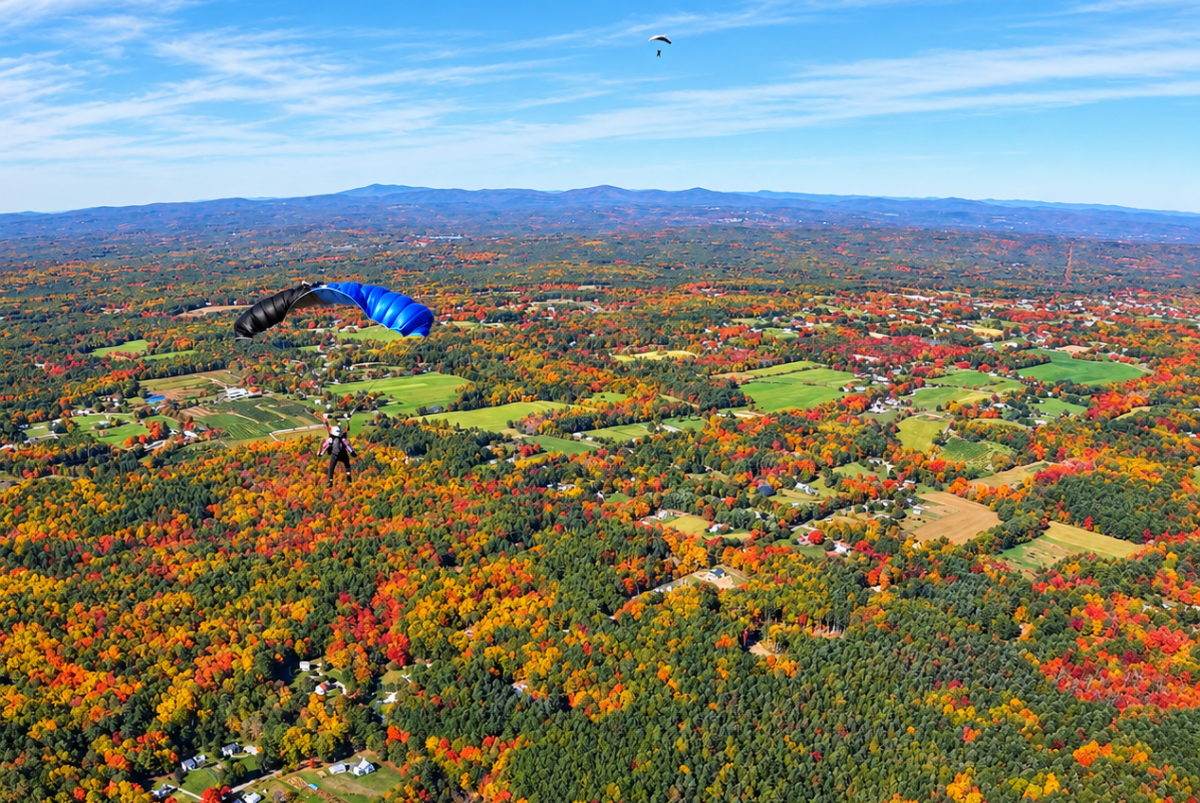
Then comes the exciting part! As the plane climbs, you’ll get a bird’s-eye view of the New England landscape. Once you reach jump altitude, you’ll exit the aircraft securely attached to your instructor and experience the incredible rush of freefall.
Once you leave the plane, you’ll experience the rush of freefall. Then the parachute opens, the pace changes, and you have time to enjoy the scenery on the way back to the drop zone.
How much does skydiving cost?
A tandem skydive at Skydive Pepperell costs $300 per person, with photo and video packages available separately. Your jump includes the instructor, equipment, training, aircraft ride, and parachute packing.
Group discounts and eligible special discounts may reduce the price. Visit our tandem skydiving pricing page for current rates and package options.
How long does a skydive take?
Plan to spend half a day at Skydive Pepperell. That allows time for paperwork, the training video, getting geared up, and your turn to head up in the aircraft.
Your reservation time is your arrival time, rather than the time your plane takes off. Weather conditions, including rain, winds, and clouds, can affect the schedule, so leave some flexibility in your day.
How long are you in the air when skydiving?
Your time in the air includes the aircraft ride, freefall, and parachute flight. Each part offers a completely different experience, from the anticipation building as the plane climbs to the excitement of freefall and the incredible views under parachute.
The total time varies depending on the aircraft’s climb, jump altitude, and conditions on the day of your skydive.

Your First Jump Starts Here
You’ve got the answers. Now experience it for yourself. Join us at Skydive Pepperell and see New England from a whole new perspective.
How long do you freefall when skydiving?
Tandem skydiving freefall generally lasts 45 to 60 seconds, depending on exit altitude and parachute deployment altitude.
Freefall ends when the main parachute deploys. The rest of the descent takes place under the parachute, giving you time to look around and enjoy the view.
How long does the parachute ride last?
At Skydive Pepperell, you’ll typically spend five to seven minutes under the parachute. This gives you time to take in the views and enjoy a different side of the experience after freefall.
Your instructor steers the parachute back toward the landing area and lets you know when to get into the landing position you practiced before your jump.
How high do you jump when skydiving?
Skydiving exit altitude varies by drop zone, aircraft, and operating conditions. Skydive Pepperell’s published jump range is 10,500 to 13,500 feet above ground level.
“Above ground level,” or AGL, measures your height above the terrain rather than above sea level. Your actual exit altitude affects how much freefall time is available.
How fast do you fall when skydiving?
During freefall, skydivers typically reach speeds of approximately 120 mph, depending on body position and other factors. Tandem instructors use a small parachute called a drogue to help control descent speed before deploying the main parachute.
Can I Skydive twice in the same day?
Absolutely! As long as weather and scheduling allow, you can experience the thrill of skydiving more than once in the same day!
Even better, Skydive Pepperell offers $50 off your second tandem skydive when you book it within 48 hours of your first jump. You don’t have to jump again that day or even within those 48 hours. Just make sure to book your second jump within that timeframe to receive the discount!
What does skydiving feel like?
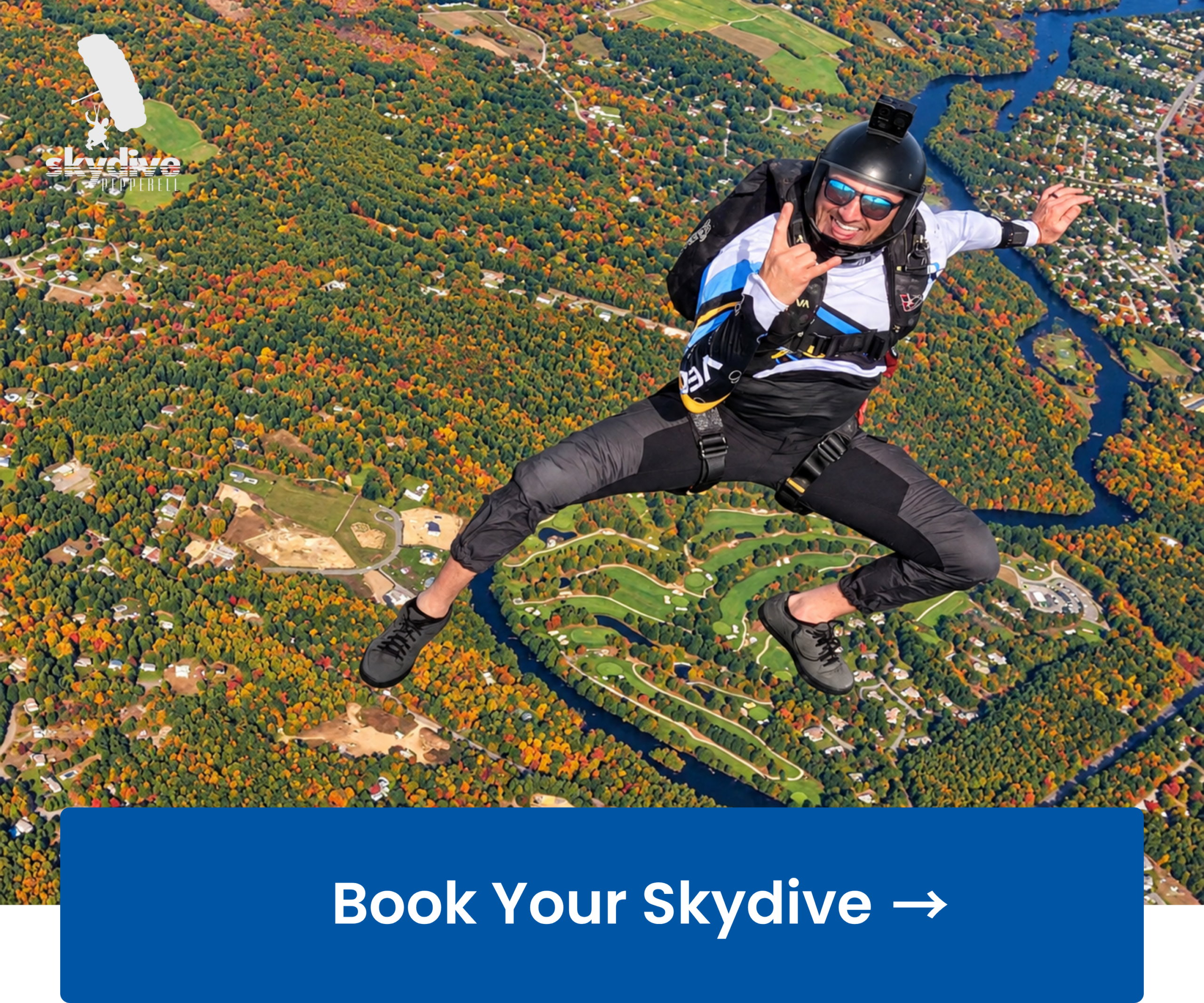
Skydiving feels different from what most people expect. Rather than a stomach-dropping sensation, many describe freefall as floating on a powerful cushion of air.
Once the parachute opens, the adrenaline rush gives way to a peaceful ride with incredible views of New England
Does your stomach drop when skydiving?
Many people are surprised that skydiving doesn’t give them the stomach drop they associate with a roller coaster. Freefall often feels more like being supported by a strong rush of air.
You might feel a brief sensation as you leave the plane, but everyone experiences that moment differently.
Can you breathe while skydiving?
Yes, you can breathe during freefall. The wind can feel intense at first, but you don’t need to hold your breath or use any special breathing technique.
Keep breathing, relax, and follow your instructor’s guidance.
What should you wear skydiving?
Wear comfortable clothing that allows easy movement and secure, lace-up sneakers. Choose layers appropriate for the temperature, and avoid loose accessories or clothing that could interfere with your harness.
For cooler days, read our guide to what to wear (and not wear) on a cold tandem skydive.
Is skydiving safe?
Skydiving is an adventure sport, and like any adventure sport, it comes with inherent risks. However, modern parachute technology, comprehensive instructor training, and established safety procedures all play an important role in managing those risks.
According to the United States Parachute Association (USPA), an estimated 3.47 million skydives were made in the United States in 2025. The sport has made significant progress in safety over the decades, thanks to improvements in equipment, training, and skydiving practices.
At Skydive Pepperell, first-time jumpers experience the excitement of skydiving while securely attached to a trained tandem instructor who manages the parachute system and guides them through the experience.
Is there a backup parachute when skydiving?
Yes! A tandem parachute system contains both a main parachute and a reserve parachute.
The reserve serves as a backup if the main parachute cannot be used safely. Tandem systems also include an Automatic Activation Device (AAD), which is designed to initiate reserve deployment under specific altitude and descent-rate conditions.
Modern skydiving equipment incorporates multiple safety features, giving instructors additional tools to manage unexpected situations.
Can skydiving cause vertigo?
If you have vertigo or recurring dizziness, talk with your healthcare provider before booking and contact us to discuss your concerns. The movement and sensations involved in skydiving may not be appropriate for everyone with these conditions.
Being afraid of heights is different from having vertigo. If heights make you nervous, let your instructor know so they can talk you through what to expect.
How old do you have to be to skydive?
At Skydive Pepperell, you must be at least 18 years old and bring a valid photo ID.
A parent’s permission does not allow someone under 18 to participate here. Check eligibility before purchasing a jump as a gift.
Is there a weight limit for skydiving?
Yes. Skydive Pepperell’s published tandem weight limit is 225 pounds. Harness fit and body proportions also affect eligibility, so being under the limit does not guarantee that someone can jump.
Contact us before booking if you have questions about weight, fit, or physical requirements.
Can you skydive if you are afraid of heights?
Absolutely! Being afraid of heights doesn’t automatically mean skydiving isn’t for you. In fact, plenty of first-time jumpers arrive feeling nervous about the idea of jumping from an airplane.
Interestingly, skydiving can feel very different from standing on the edge of a tall building or looking down from a ladder. At thousands of feet above the ground, you don’t have the same nearby visual references that often trigger a fear of heights.
Everyone experiences skydiving differently, but your tandem instructor will be there to explain each step, answer your questions, and guide you through the experience.
Can you bring your phone or GoPro skydiving?
Tandem students cannot bring a phone, GoPro, or other personal camera on their jump at Skydive Pepperell. Loose devices and camera attachments can create hazards or interfere with equipment.
If you want photos and footage to share afterward, explore our photo and video packages before your jump.
What happens if the weather is bad?
Rain, strong winds, clouds, and poor visibility can delay jumping or mean we need to reschedule. Even when it looks nice on the ground, conditions higher up may be different.
We know you’re excited to jump, and we want to get you in the sky when conditions allow. Leave some flexibility in your schedule, watch for updates from us, and contact us if you have questions before heading to the drop zone.
Can you skydive in cold weather?
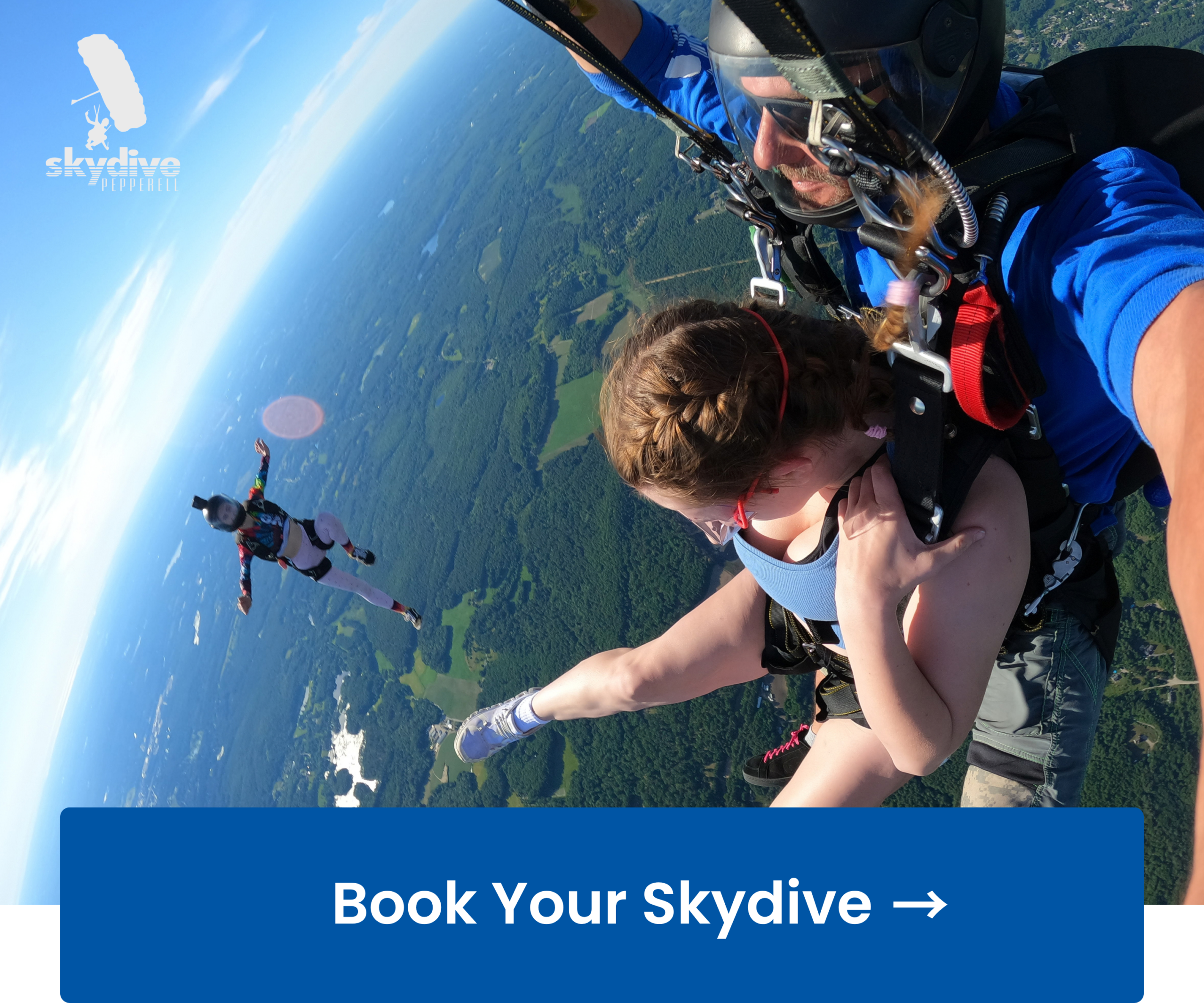
Yes, you can skydive in cooler weather when conditions are suitable. Dressing in comfortable layers helps you enjoy the experience, especially because it’s generally cooler at altitude.
Fall can be a beautiful time to jump and enjoy the changing scenery. Skydive Pepperell operates seasonally and does not jump through the winter, so check our available dates when planning your visit.
Can you skydive alone on your first jump?
If you’re looking to experience skydiving without completing a full student training course first, a tandem jump lets you jump with an instructor who handles the parachute system.
If your goal is to jump with your own parachute, ask us about our Accelerated Freefall program, or AFF. You’ll complete ground training before jumping with your own equipment under instructor supervision, then progress through training toward independent skydiving. Interested in learning? Fill out our AFF interest form, and we’ll contact you with more information and help you take the next step.
Which is safer: skydiving or bungee jumping?
Both activities involve risk, and there isn’t a straightforward comparison that tells you one is safer than the other.
If you’re considering a tandem skydive, understanding the training, equipment, and your instructor’s role can help you make an informed decision. We’re happy to answer your questions before you book
Why do people enjoy skydiving?
People often enjoy skydiving for the challenge, the scenery, and the sense of accomplishment that follows trying something unfamiliar. Others discover a sport and community they want to return to.
Whether you’re celebrating, checking something off your bucket list, or trying something new with friends, skydiving gives you an experience you can share and remember long afterward. For some, that first jump becomes the start of a whole new journey.
When was skydiving invented?
Skydiving developed through several milestones rather than one invention date. André-Jacques Garnerin made a pioneering parachute descent from a balloon in Paris on October 22, 1797.
A major milestone toward modern freefall skydiving followed on April 28, 1919, when Leslie Irvin made a freefall jump using a manually operated parachute at McCook Field in Ohio.
Who invented skydiving?
No single person invented every part of skydiving. André-Jacques Garnerin is associated with early parachuting, while Leslie Irvin helped establish modern freefall parachuting.
Parachutes, deployment systems, training methods, and sport skydiving continued to develop through the work of many people.
Who invented tandem skydiving?
Ted Strong was a pioneer of modern tandem skydiving and an important part of Skydive Pepperell’s history. He opened the first commercial drop zone at Pepperell in 1971 and later helped develop dedicated tandem parachute equipment.
In 1983, Strong Enterprises introduced its tandem parachute system, helping shape the experience we know today.
His legacy is closely connected to our own. In 1990, Athena Fran Strimenos, affectionately known as “Fast Frannie,” took over the drop zone and continued building its legacy. Learn more about Skydive Pepperell’s history.
Can I bring family and friends to watch?
Absolutely! Family and friends are always welcome to come cheer you on! Skydive Pepperell has plenty of open space and picnic tables where spectators can relax, enjoy music throughout the day, and watch the skydiving action.
We also have vending machines for snacks and drinks!
Furry friends are welcome, too! We’re a dog-friendly drop zone, and you’ll often see a few four-legged regulars hanging around. We just ask that visiting dogs be friendly, kept on a leash, and under their owner’s supervision.
Children are welcome as well, but must be supervised by an adult at all times. For everyone’s safety, please stay within designated spectator areas.
Is Tipping Expected?
Tipping is never expected, but always appreciated! Our instructors are passionate about sharing the excitement of skydiving and introducing new people to the sport. While they are compensated for their work, gratuities are a thoughtful way to show your appreciation for the time, training, and dedication they put into making your experience memorable.
Ready for your first skydive?
Have a question we haven’t answered? Contact Skydive Pepperell and we’ll help you prepare.
If you’re ready to choose a date, explore tandem skydiving and current pricing and plan your jump in Pepperell, Massachusetts.